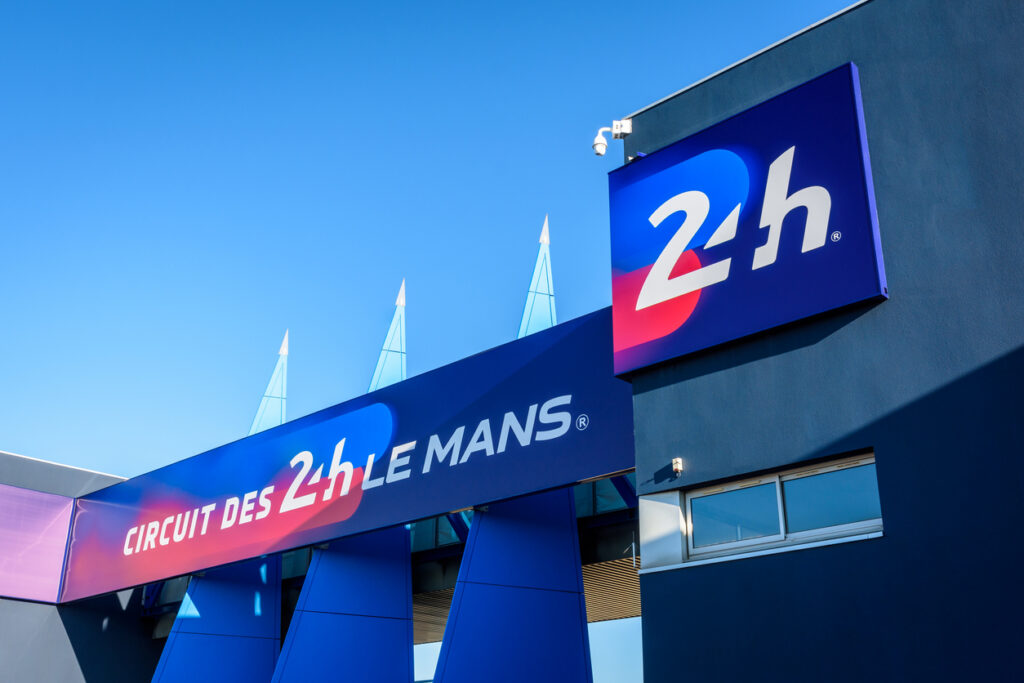
The 94th edition of the 24 Hours of Le Mans takes place from 13 to 14 June 2026 at the Circuit de la Sarthe in Le Mans, France. The world’s oldest and most prestigious endurance motor race, Le Mans is the centrepiece of the FIA World Endurance Championship calendar and one of the three races that form motorsport’s unofficial Triple Crown. A field of 62 cars across three classes will compete around the legendary 13.626-kilometre circuit for a full 24 hours, testing the limits of engineering, strategy, and human endurance.
What is the 24 Hours of Le Mans?
The 24 Hours of Le Mans is a sports car endurance race held annually near the city of Le Mans in the Sarthe department of France. First run in 1923, the event was conceived by automotive journalist Charles Faroux, ACO general secretary Georges Durand, and industrialist Emile Coquille as a test of vehicle durability, reliability, and efficiency. It is organised by the Automobile Club de l’Ouest (ACO) and now serves as the flagship round of the FIA World Endurance Championship (WEC).
Teams of three drivers share a single car across the full 24-hour duration, with the winner determined by whichever car covers the greatest distance within the time limit. The 2026 race features three classes: Hypercar (the top tier, featuring prototype and hybrid machinery from the world’s leading manufacturers), LMP2 (a cost-controlled prototype class), and LMGT3 (production-based GT cars). The Hypercar class alone will see 18 entries from manufacturers including Ferrari, Toyota, Porsche, Cadillac, Peugeot, Alpine, BMW, Aston Martin, and newcomer Genesis.
When is the 24 Hours of Le Mans?
The full Le Mans race week runs from Wednesday 10 June to Sunday 14 June 2026. The schedule includes scrutineering and administrative checks in the early part of the week, followed by practice sessions and qualifying on Wednesday and Thursday. The Hyperpole qualifying session, which determines the top grid positions, is traditionally held on Thursday evening. The race itself begins at 16:00 local time (CEST) on Saturday 13 June and finishes at 16:00 on Sunday 14 June.
Where is the 24 Hours of Le Mans?
The race takes place at the Circuit de la Sarthe, a semi-permanent circuit located south of Le Mans in north-western France. The full course measures 13.626 kilometres and uses a combination of permanent racing facilities (shared with the shorter Bugatti Circuit) and closed public roads. This unique layout includes the famous Mulsanne Straight, the Porsche Curves, and the Ford Chicanes. The venue has a total capacity of approximately 263,500 spectators, and the race regularly attracts crowds in excess of 250,000 across the weekend. Le Mans is approximately 200 kilometres south-west of Paris, accessible by TGV high-speed train or via the A11 motorway.
Key Contenders
Ferrari enter the 2026 race as three-time consecutive winners, having claimed victory in 2023, 2024, and 2025. Their 2025 triumph, secured by the AF Corse-run No. 83 Ferrari 499P of Yifei Ye, Phil Hanson, and Robert Kubica, earned the Prancing Horse the right to keep the winners’ trophy permanently. Ferrari will be determined to make it four in a row and now count 12 overall victories at La Sarthe.
Toyota, the most experienced Hypercar team on the grid, have significantly updated their rebranded TR010 Hybrid over the winter. Five-time winners between 2018 and 2022, the Japanese manufacturer will be eager to reclaim a race they once dominated. Meanwhile, Porsche showed strong pace in 2025 with the 963 LMDh, finishing second, and will push hard for their record-extending 20th overall victory.
Cadillac field three V-Series.R entries in 2026, with two run by Cadillac Hertz Team JOTA and a third by Wayne Taylor Racing. The American marque has been a consistent front-runner since joining the Hypercar class. Genesis, Hyundai’s luxury division, will make history as the first Korean manufacturer to compete at Le Mans, running two cars in the top class.
On home soil, both Peugeot and Alpine will be chasing breakthrough results. Peugeot’s last Le Mans victory came in 2009 with the 908 HDi, while Alpine’s drought stretches back to 1978. Aston Martin and BMW round out a Hypercar field of extraordinary depth and quality.
How to Watch the 24 Hours of Le Mans
In the United Kingdom, the race is broadcast live on Eurosport and TNT Sports, with streaming available via the Discovery+ premium package (from £30.99 per month). Sky subscribers can add TNT Sports channels to their existing package. Full uninterrupted coverage of the entire 24 hours is typically available.
In the United States, MotorTrend provides television coverage, with streaming available through Max (Standard or Premium subscription required). Additional streaming options include FuboTV and Hulu + Live TV. The FIA WEC TV app offers direct streaming in many international markets, though geo-restrictions apply in the USA and Canada.
Across Europe, Eurosport and Discovery+ carry the race in more than 50 markets. In France, the host broadcaster provides free-to-air coverage. Radio Le Mans offers free live commentary online throughout the full 24 hours, serving as a popular companion for fans following the race worldwide.
History and Records
The 24 Hours of Le Mans has been held 93 times since its inaugural running in 1923, with interruptions only for the French general strikes of 1936 and the Second World War (1940 to 1948). The race has witnessed some of motorsport’s most iconic moments, from the tragic 1955 disaster that claimed 84 lives to Ford’s famous victory over Ferrari in 1966, dramatised in the 2019 film Le Mans ’66.
Porsche hold the record for the most manufacturer victories with 19, followed by Audi with 13 and Ferrari with 12. Danish driver Tom Kristensen is the most successful individual competitor with nine wins between 1997 and 2013, including six consecutive victories from 2000 to 2005. Henri Pescarolo holds the record for the most appearances at 33. The distance record was set in 2010 when Audi’s No. 9 R15 TDI covered 5,410.713 kilometres in the 24 hours.
The race has crowned 152 individual winners from 24 countries and 25 different manufacturers from seven nations across its long history, cementing its status as the ultimate test of speed and endurance in world motorsport.
Tickets and Attendance
Tickets for the 2026 24 Hours of Le Mans are available through the official website at 24h-lemans.com. ACO members receive priority access, with general sale tickets following shortly after. Prices for 2026 have been frozen at 2025 rates. General admission tickets provide access to spectator areas around the circuit, while grandstand seats offer reserved viewing at key corners. Paddock access and Gridwalk passes are also available in limited numbers.
Purchases are limited to four tickets per buyer, with ACO members entitled to two tickets at a discounted rate. Packages for 2026 are selling faster than previous editions, with several options already sold out. Hospitality packages are available through the ACO and authorised travel partners, offering premium viewing, pit lane access, and catering. Camping is a major part of the Le Mans experience, with dedicated campsites available within and around the circuit.
Frequently Asked Questions
When does the 24 Hours of Le Mans start?
The race starts at 16:00 CEST on Saturday 13 June 2026 and finishes at 16:00 CEST on Sunday 14 June 2026. The full event week runs from 10 to 14 June.
Where is the 24 Hours of Le Mans held?
The race is held at the Circuit de la Sarthe, a 13.626-kilometre semi-permanent circuit near Le Mans in the Sarthe department of north-western France.
How can I watch the 24 Hours of Le Mans?
In the UK, coverage is on Eurosport/TNT Sports and Discovery+. In the US, MotorTrend and Max carry the broadcast. The FIA WEC TV app streams the race in many international markets. Radio Le Mans provides free audio commentary online.
Who won the 24 Hours of Le Mans in 2025?
Ferrari won for the third consecutive year in 2025. The No. 83 AF Corse Ferrari 499P, driven by Yifei Ye, Phil Hanson, and Robert Kubica, took the overall victory.
How long is the Circuit de la Sarthe?
The full Le Mans circuit measures 13.626 kilometres per lap, making it one of the longest circuits in world motorsport. It combines permanent racing facilities with sections of closed public road.