The 110th Running of the Indianapolis 500 takes place on Sunday 24 May 2026 at the Indianapolis Motor Speedway in Speedway, Indiana. The world’s largest single-day sporting event, the Indy 500 draws over 300,000 spectators to the 2.5-mile oval for 200 laps of flat-out open-wheel racing. Defending champion Alex Palou heads the field as part of the NTT IndyCar Series season, with 33 cars expected on the grid.
What is the Indianapolis 500?
The Indianapolis 500 is the premier event in American open-wheel motor racing and one of the most famous races in the world. First held in 1911, the race has been contested annually at the Indianapolis Motor Speedway (with the exception of wartime interruptions in 1917-18 and 1942-45), making it one of the oldest and most storied events in motorsport. Together with the Monaco Grand Prix and the 24 Hours of Le Mans, it forms the “Triple Crown of Motorsport”.
The race comprises 200 laps of the 2.5-mile (4.023 km) rectangular oval, covering a total distance of 500 miles (804.7 km). The field is limited to 33 cars, a tradition dating back to the earliest editions. Qualifying takes place over two days (Bump Day format), with the fastest qualifier earning the coveted pole position on the inside of the front row. Speeds regularly exceed 230 mph during qualifying and 220 mph during the race.
When is the 2026 Indianapolis 500?
Race day is Sunday 24 May 2026, with the green flag scheduled for 12:45 pm Eastern Time. The full Month of May schedule begins with practice opening on Tuesday 12 May. Time trials (qualifying) take place on 16 and 17 May. Carb Day, the traditional final practice session combined with the Pit Stop Challenge and a concert, is held on Friday 22 May.
Race day itself begins early, with gates opening at 6:00 am. The pre-race ceremonies are an integral part of the experience: the Borg-Warner Trophy March to the Bricks at 8:45 am, driver introductions at 11:47 am, the invocation and national anthem at 12:18 pm, and the traditional rendition of “Back Home Again in Indiana” at 12:35 pm, shortly before the command to start engines.
Where is the Indianapolis 500?
The Indianapolis Motor Speedway (IMS) is located in Speedway, Indiana, a small enclave town surrounded by the city of Indianapolis. Constructed in 1909, the Speedway is the largest sporting venue in the world by capacity, with permanent seating for 257,325 and a total capacity of approximately 400,000 when infield areas are included.
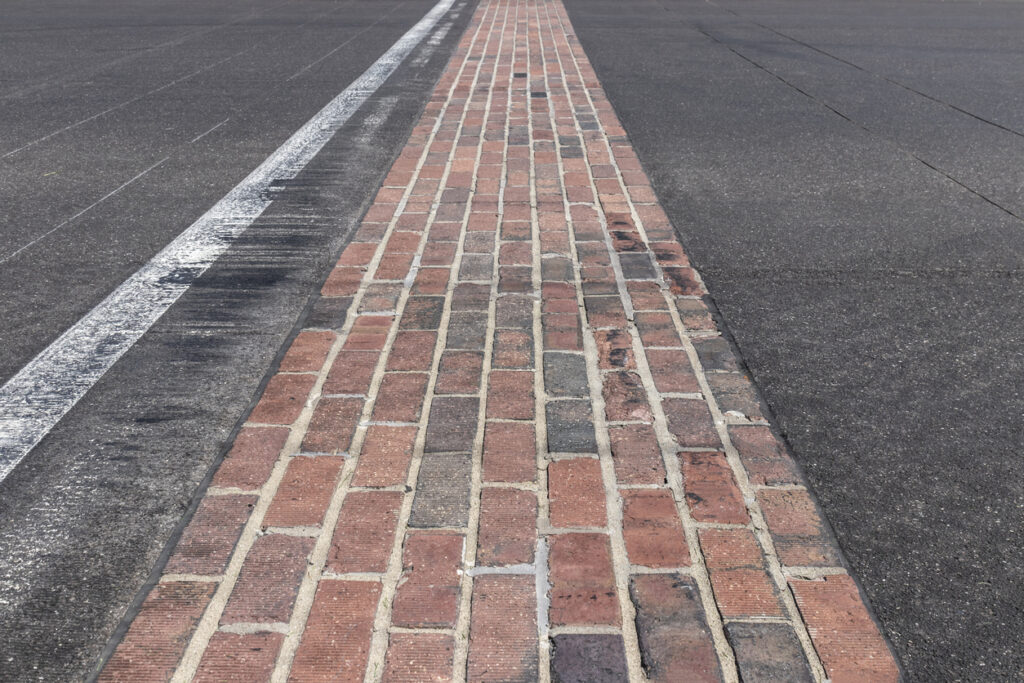
The facility covers 559 acres, and the oval itself is so large that several other major sporting venues could fit inside the infield. The track’s nickname, “The Brickyard”, derives from its original brick racing surface, laid in 1909. A single yard of original brick remains exposed at the start/finish line, and it is a tradition for the race winner to kneel and kiss the bricks in victory.
The Speedway is approximately 15 minutes west of downtown Indianapolis and is accessible via Interstate 465 and several major roads. Indianapolis International Airport is roughly 20 minutes away by car.
Key Contenders
Defending champion Alex Palou enters the 2026 race as the clear favourite. The Spaniard is a four-time IndyCar Series champion and won his first Indy 500 in 2025, establishing himself as the dominant force in the series. He drives for Chip Ganassi Racing.
Two-time Indy 500 winner Josef Newgarden (2023, 2024) of Team Penske remains among the leading contenders, alongside teammates Scott McLaughlin and the rest of the formidable Penske operation. Pato O’Ward of Arrow McLaren and Christian Lundgaard are also among the frontrunners.
The entry list features notable returning veterans. Four-time winner Helio Castroneves, now 51, returns with Meyer Shank Racing in pursuit of a record-breaking fifth victory. Two-time winner Takuma Sato also makes a return with Rahal Letterman Lanigan Racing. Ed Carpenter, a specialist on ovals who has won the Indy 500 pole position multiple times, enters in ECR’s fourth car.
International interest is heightened by Mick Schumacher’s rookie IndyCar season, bringing the famous Schumacher name to the Brickyard. British fans can follow Louis Foster, the 2025 IndyCar Rookie of the Year.
How to Watch the Indianapolis 500
United States: The 2026 Indy 500 will be broadcast live on Fox, marking a new era following Fox Corporation’s acquisition of a one-third stake in IndyCar’s parent company Penske Entertainment. Coverage begins at 10:00 am ET. Streaming is available through the Fox Sports app and major live TV services including Fubo, YouTube TV, Hulu + Live TV, and DIRECTV STREAM. Spanish-language coverage is available on Fox Deportes.
United Kingdom: Sky Sports holds exclusive live broadcasting rights for IndyCar in the UK, including the Indy 500.
Italy: Sky Sports Italia provides live coverage.
Germany, Austria and Switzerland: Sky Deutschland broadcasts all IndyCar races.
Global: IndyCar has expanded its international broadcast presence for 2026, reaching more than 200 countries and territories through a network of broadcast partners. INDYCAR LIVE, the series’ direct-to-consumer streaming service, offers full coverage of every race, practice, and qualifying session in territories not served by a local broadcaster.
History and Records
The Indianapolis 500 was first held on 30 May 1911, when Ray Harroun won the inaugural race at an average speed of 74.6 mph driving the Marmon Wasp. The race has since been held 109 times through 2025, with 76 different winners.
Four drivers share the record for most victories: A.J. Foyt (1961, 1964, 1967, 1977), Al Unser (1970, 1971, 1978, 1987), Rick Mears (1979, 1982, 1988, 1991), and Helio Castroneves (2001, 2002, 2009, 2021). Castroneves’ return to the 2026 race offers the tantalising possibility of a record-breaking fifth win.
A.J. Foyt holds the record for career starts with 35. The youngest winner was Troy Ruttman, who won in 1952 aged 22. Al Unser is the oldest winner, triumphing in 1987 at the age of 47. The race has produced some of motorsport’s most dramatic moments, including the legendary duels between Foyt and Parnelli Jones, the Unser family dynasty, and Castroneves’s iconic fence-climbing celebrations.
The Borg-Warner Trophy, awarded to the winner since 1936, features the face of every Indy 500 winner sculpted in sterling silver relief. The winner also traditionally receives a bottle of milk in Victory Lane, a tradition that began in 1936.
Tickets and Attendance
The Indianapolis 500 is one of the most accessible major sporting events in terms of ticket availability, thanks to the enormous capacity of the Speedway. General admission tickets start at approximately 40 USD, offering access to the infield mounds with views of portions of the track. Reserved grandstand seats vary widely in price depending on location, with Turn 1 and the front straight commanding premium prices.
Tickets can be purchased through the official Indianapolis Motor Speedway website, Ticketmaster, and authorised resale platforms including SeatGeek and Vivid Seats. Hospitality packages, pit passes, and VIP experiences are available through On Location, the official travel partner of IMS, and can cost several thousand dollars.
For first-time attendees, ear protection is strongly recommended (the noise is extraordinary), and it is worth arriving early to soak up the pre-race atmosphere, which is unlike anything else in motorsport.
Frequently Asked Questions
When is the 2026 Indianapolis 500?
Race day is Sunday 24 May 2026, with the green flag at 12:45 pm ET. The Month of May schedule begins on 12 May with practice.
Where is the Indianapolis 500 held?
The Indianapolis Motor Speedway in Speedway, Indiana, approximately 15 minutes west of downtown Indianapolis.
How can I watch the Indianapolis 500?
In the US, the race is live on Fox and streaming on the Fox Sports app. In the UK, Sky Sports holds the rights. Globally, INDYCAR LIVE provides streaming in 200+ territories.
Who won the 2025 Indianapolis 500?
Alex Palou of Spain, driving for Chip Ganassi Racing, won his first Indy 500 in 2025.
How many cars start the Indianapolis 500?
Traditionally, 33 cars make up the starting grid, determined by qualifying times over two days of time trials.