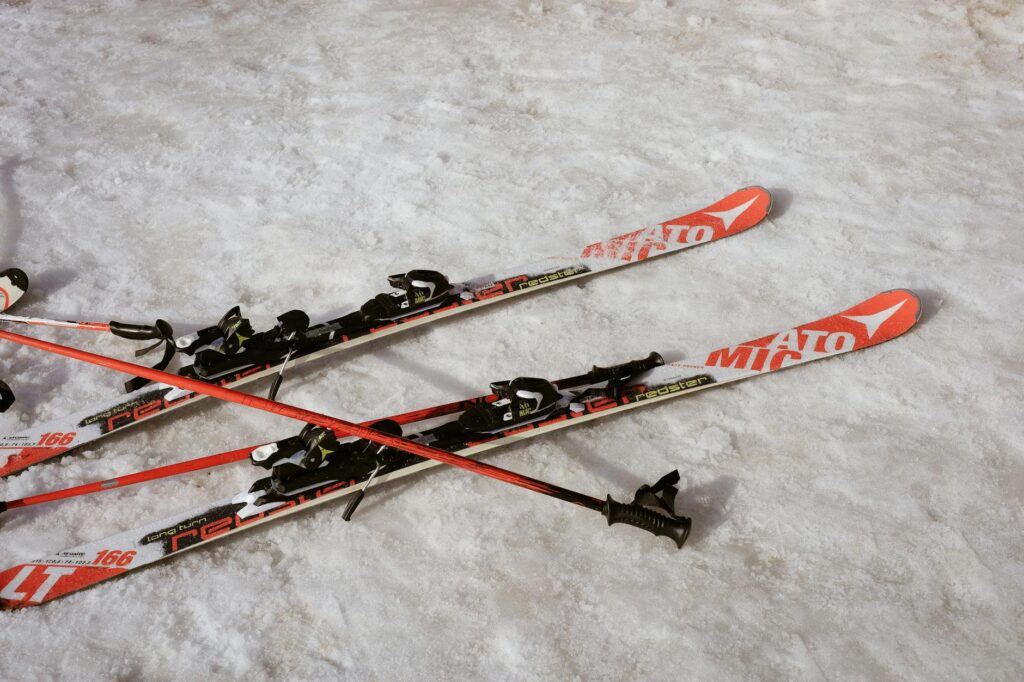
The 2026 Winter Olympics, officially the XXV Olympic Winter Games, took place from 6 to 22 February 2026 across venues in Milan, Cortina d’Ampezzo, and several other locations in northern Italy. Featuring 16 sport disciplines and more than 2,900 athletes from over 90 nations, the Milano Cortina Games were the first Winter Olympics held in Italy since Turin 2006 and the first to use a multi-city format spread across the Lombardy and Veneto regions.
What is the Winter Olympics?
The Olympic Winter Games is a major international multi-sport event held every four years, organised by the International Olympic Committee (IOC). The Winter Games feature sports practised on snow and ice, including alpine skiing, cross-country skiing, figure skating, ice hockey, biathlon, bobsleigh, luge, skeleton, speed skating, short track speed skating, freestyle skiing, snowboard, ski jumping, Nordic combined, and curling. The 2026 edition also featured the debut of ski mountaineering as an Olympic sport.
The Winter Olympics were first held in Chamonix, France, in 1924 and have been staged every four years since, with the exception of 1940 and 1944 due to the Second World War. The Games alternated with the Summer Olympics until 1992, after which they shifted to a separate four-year cycle starting with Lillehammer in 1994.
When Were the 2026 Winter Olympics?
The Milano Cortina 2026 Games ran from Friday 6 February to Sunday 22 February 2026, spanning 17 days of competition. The Opening Ceremony was held at the iconic San Siro Stadium in Milan, while the Closing Ceremony took place at Verona’s Arena, a Roman amphitheatre dating from the first century AD.
Competition sessions were typically split across the day, with snow sports held in the morning and early afternoon (taking advantage of optimal conditions) and ice sports in the afternoon and evening. The favourable European time zone meant that most medal events aired in daytime hours for viewers across Europe, and morning broadcasts in the Americas.
Where Were the 2026 Winter Olympics?
The Games used 15 competition venues spread across northern Italy. Milan hosted all ice sports, including figure skating, short track, speed skating, ice hockey, and curling. Cortina d’Ampezzo, in the Dolomites, hosted alpine skiing (at the Tofane Alpine Skiing Centre), sliding events (bobsleigh, luge, skeleton), and curling. Other venues included Bormio (alpine skiing downhill and Super-G at the Stelvio course), Livigno (freestyle skiing and snowboarding), Anterselva (biathlon), and the Val di Fiemme (cross-country skiing at Tesero, ski jumping at Predazzo).
The multi-city format was a defining feature of the Games, spreading the Olympic experience across a wide area of Lombardy, Veneto, and Trentino-Alto Adige. Transport links between venues relied on a combination of rail, bus, and road connections.
Key Performers
Norway’s Johannes Hoesflot Klaebo was the outstanding individual of the Games, winning six gold medals in cross-country skiing to set a record for the most gold medals won at a single Winter Olympics. With 11 career Olympic golds, Klaebo also became the most decorated Winter Olympic champion in history.
In alpine skiing, Switzerland’s Marco Odermatt and American veteran Mikaela Shiffrin confirmed their status as generational talents. Shiffrin added to her Olympic medal collection, cementing her place as the most successful alpine skier of her era with over 100 World Cup victories to her name. Italy’s Federica Brignone thrilled the home crowds with strong performances on familiar slopes.
The United States earned 12 gold medals, their most ever at a Winter Games, finishing second on the medal table with 33 medals overall. Standout American performers included snowboard halfpipe star Chloe Kim, who was chasing an historic third consecutive Olympic gold.
One of the most remarkable stories of the Games came from Brazil, who won their first ever Winter Olympic medal and gold, a historic achievement for any tropical nation. Canada’s Connor McDavid made his highly anticipated Olympic ice hockey debut, leading one of the strongest national teams in the tournament.
How to Watch the Winter Olympics
The Milano Cortina 2026 Winter Olympics received extensive global broadcast coverage:
United Kingdom: The BBC provided more than 450 hours of free-to-air coverage across BBC One, BBC Two, BBC iPlayer, and the BBC Sport website. TNT Sports (formerly Eurosport) offered over 850 hours of coverage on TNT Sports 2 and Discovery+.
United States: NBC held exclusive rights, with coverage across NBC, USA Network, CNBC, and comprehensive streaming on Peacock and NBCOlympics.com.
Canada: CBC/Radio-Canada provided extensive French and English coverage.
Australia: Nine Network and Stan Sport broadcast the Games.
Europe: Warner Bros. Discovery held pan-European pay-TV rights through Eurosport and Discovery+, covering 49 territories. Many national public broadcasters also provided free-to-air coverage under sub-licensing agreements.
Japan: NHK and a consortium of commercial broadcasters provided coverage.
Medal Table and Results
Norway dominated the medal table with 41 medals (18 gold, 12 silver, 11 bronze), breaking their own record for most medals won at a single Winter Olympics, surpassing the 39 they won at PyeongChang 2018. The United States finished second with 33 medals (12 gold, their highest ever at a Winter Games), followed by the Netherlands (20 medals, 10 gold), host nation Italy (30 medals, 10 gold), and Germany (26 medals, 8 gold). France, Sweden, Switzerland, Austria, and Japan completed the top ten.
History and Records
The Winter Olympics has been held 25 times since 1924. Norway leads the all-time medal table with over 400 medals, followed by the United States and Germany. The most decorated Winter Olympian of all time is Norwegian cross-country skier Marit Bjoergen, with 15 medals across five Games, though Klaebo’s 11 golds from Milano Cortina 2026 set a new record for career gold medals.
The Games have been held across Europe, North America, and Asia. Notable host cities include Innsbruck (1964, 1976), Lake Placid (1932, 1980), Sapporo (1972), Lillehammer (1994), Salt Lake City (2002), Turin (2006), Vancouver (2010), Sochi (2014), PyeongChang (2018), and Beijing (2022). The next Winter Olympics will be held in the French Alps in 2030.
Tickets and Attendance
Tickets for the Milano Cortina 2026 Games were sold exclusively through the official ticketing portal. Prices started at 30 euros, with more than half of all tickets priced under 100 euros. Premium events such as figure skating and the ceremonies commanded higher prices, with some seats reaching 700 euros. A maximum of 25 tickets could be purchased per account, with a limit of 10 per session (4 for ceremonies and high-demand events). All tickets were nominative, requiring the name of the attendee at purchase.
Frequently Asked Questions
When were the 2026 Winter Olympics?
The Milano Cortina 2026 Winter Olympics took place from 6 to 22 February 2026.
Where were the 2026 Winter Olympics held?
Across multiple venues in northern Italy, with Milan hosting ice sports, Cortina d’Ampezzo hosting alpine skiing and sliding events, and additional venues in Bormio, Livigno, Anterselva, and Val di Fiemme.
Who topped the medal table at the 2026 Winter Olympics?
Norway led with 41 medals (18 gold), followed by the United States (33 medals, 12 gold) and the Netherlands (20 medals, 10 gold).
Where are the next Winter Olympics?
The 2030 Winter Olympics will be held in the French Alps.
How many sports featured at the 2026 Winter Olympics?
Sixteen sport disciplines were contested, with ski mountaineering making its Olympic debut.